What is Finn Garden?
Finn Garden is a public workshop where small products are built, shipped, and run in the real world—with every lesson published along the way. It's a transparent record of actual launches, covering the tactics that worked, the ones that flopped, and the numbers behind both. The content spans build articles with honest tool comparisons and stack breakdowns, plus marketing playbooks on cold email, follow-up sequences, distribution, and SEO/GEO experiments. Everything is free to read, with a newsletter that distills what's working right now for solo founders and indie hackers.
Who it's for
- Solo founders who want to skip the trial-and-error phase and learn from someone else's real-world launches instead of repeating their wasted months.
- Indie hackers looking for honest, no-fluff breakdowns of tools, stacks, and marketing tactics that have actually been tested in production.
- Makers who prefer behind-the-scenes updates on live products over recycled advice or theoretical frameworks that never touch reality.
Key features
Build articles with real stack breakdowns
The build articles dig into concrete technical decisions—like comparing Base44 and Lovable by who owns the backend, or evaluating OpenClaw alternatives based on credential security. These aren't surface-level reviews; they're practical comparisons that help you choose tools that hold up in production.
Marketing playbooks from live campaigns
Cold email subject lines, follow-up sequences, and LinkedIn preview fixes are covered with specific, actionable tactics. The advice is grounded in what actually happened during launches, not generic best practices. Each playbook explains the reasoning behind the tactic, so you understand why it works.
Behind-the-scenes product updates
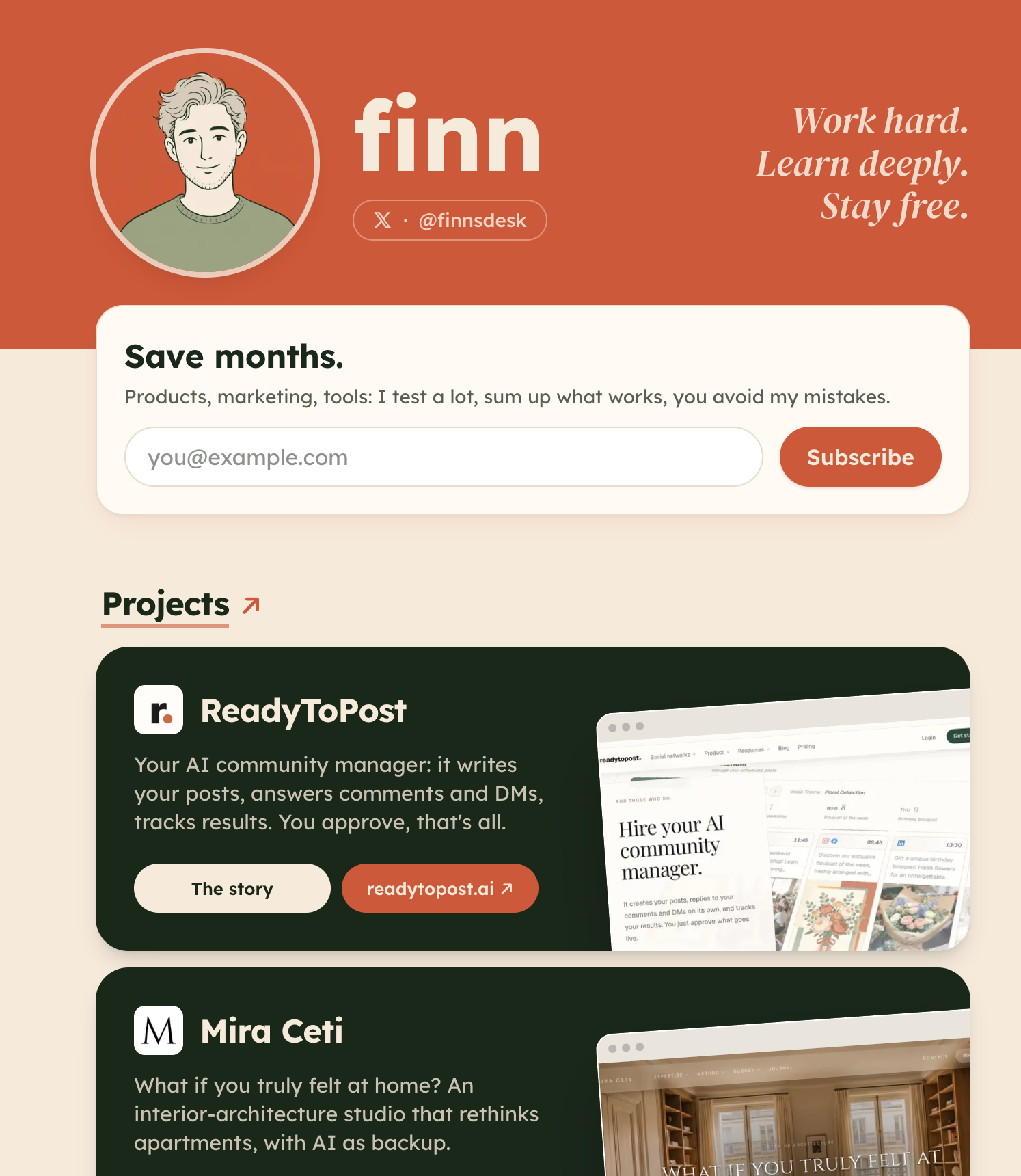
Finn Garden doesn't just write about building—it actively ships products like ReadyToPost (an AI community manager) and Mira Ceti (an interior-architecture studio). You get a front-row seat to how these products evolve, including what's tried, what's dropped, and what's kept.
Free newsletter with current insights
The newsletter sums up what's working right now, cutting through the noise. It's designed for people who'd rather learn from someone else's experiments than conduct their own costly ones. No recycled advice, no fluff—just current, actionable takeaways.
What stands out
"Work hard. Learn deeply. Stay free."
That ethos drives everything: Finn Garden publishes both wins and failures with equal transparency. Most product blogs show only the polished results, but here you get the full picture—including the numbers behind flops. This honesty makes the advice unusually trustworthy, because you can see exactly what context it came from. The focus on real launches rather than theory means every recommendation has been battle-tested.
Worth checking out if…
You're tired of generic marketing advice and want to learn from someone who's actively shipping products and documenting the results. If you value transparency over polish and prefer concrete tactics over recycled tips, Finn Garden's free articles and newsletter offer a practical shortcut to avoiding common mistakes. It's especially useful if you're building small products solo and want to see how different tools and strategies perform in real-world conditions.